7-to-NeST: Moving Beyond Velocities
Transform your seismic velocity models into a variety of derived results to match your clients needs
7-to-NeST
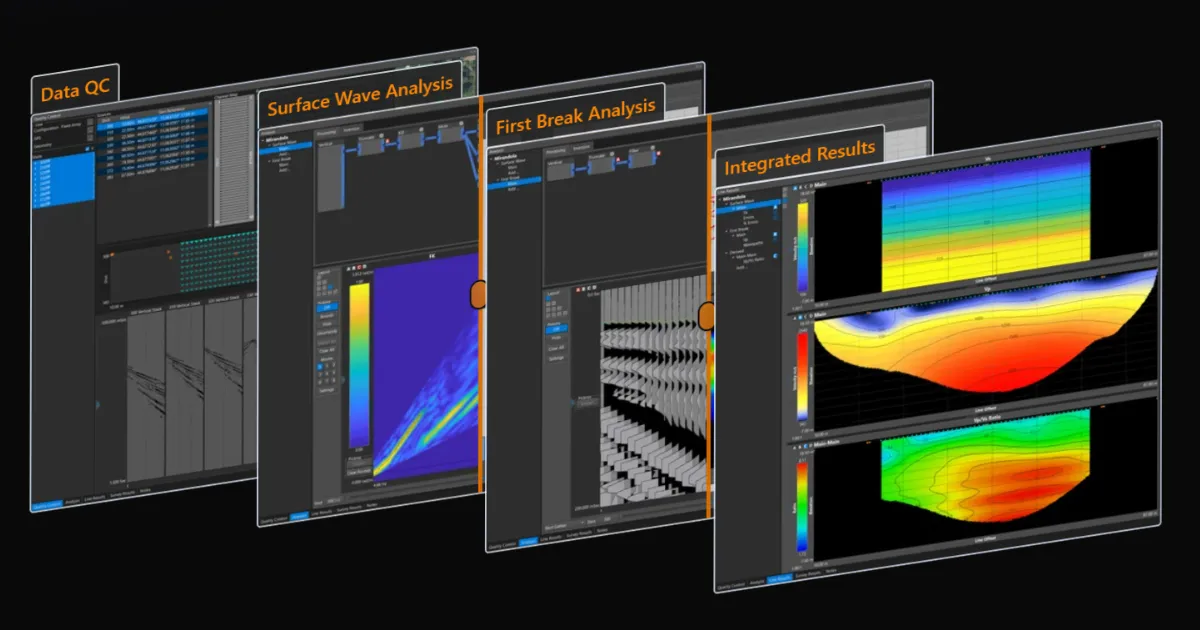
From the early days of GeoFennex, I asked everyone I talked to what their existing near surface seismic processing workflow looked like and what software they needed. After dozens of these conversations, the average number of indivdual software packages appears to be 7. These 7 softwares are used to accomplish a variety of tasks including data QC, Geo-Referencing, MASW processing, first break analysis, and generating results. This series of posts will explore the various features that will allow you to simplify your workflow from an average of 7 different softwares, to just NeST.
Moving Beyond Velocities
To continue from our previous post in this series, 7-to-NeST: Start at the End (where I highlight how NeST can export geo-referenced results), I want to present the wide range of result options available in NeST.
Within NeST, we view seismic velocities (Vp and Vs) as “base” results, as they are the primary results that our first break and surface wave analyses deliver. While seismic velocities can be used to infer all sorts of things about the subsurface, most people outside of geophysicists and well informed engineers do not know how to interpret seismic velocities.
Using different equations and lab/field derived empirical relationships, seismic velocities can be transformed into a variety of results that offer more physical and/or conceptual meaning to the final consumer. With existing data processing and inversion tools, the user is tasked with creating these derived results which requires several additional tools. From my own experience and those of many I have talked to, there is a combination of a mathematical computation tools (i.e. Matlab, Python, Julia) and custom scripts. If a derived result requires using both Vs and Vp estimates that are calculated in different packages, then the implementation complexity increases significantly as now these results need to be correctly aligned, resampled, extrapolated, and tweaked to be able to calculate the derived results.
In NeST, we have sorted out all the details with all the tools integrated into one. Derived results can be created with just a few clicks! We support a wide range of options with more to come in the future.
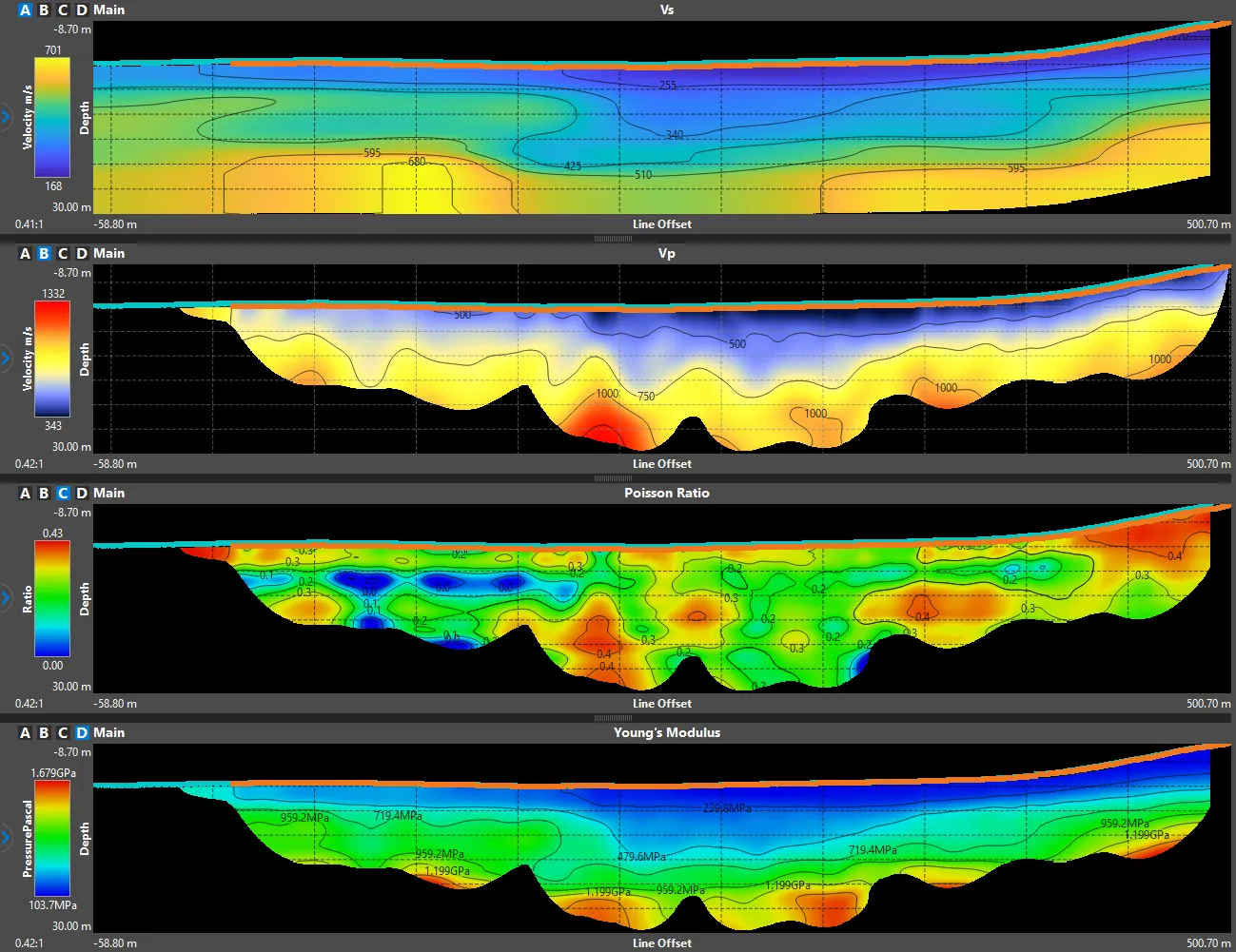
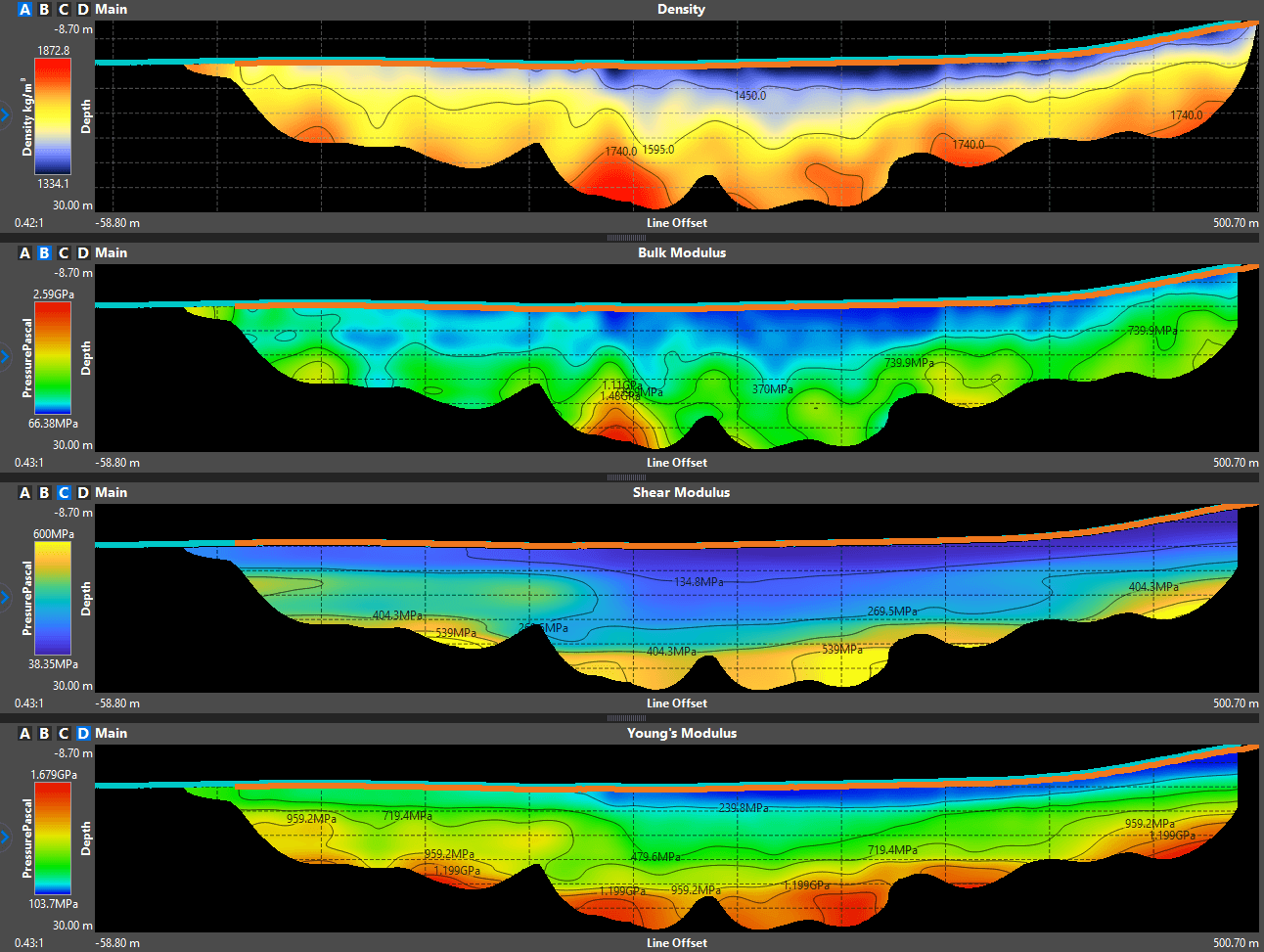 Density (from Gardner’s relation), Bulk modulus, Shear modulus, and Young’s Modulus to show a few of the options. Note that several of these require both Vs and Vp estimates to calculate
Currently supported Derived Results
- Density (Gardner’s relation and those specified in surface wave inversion)
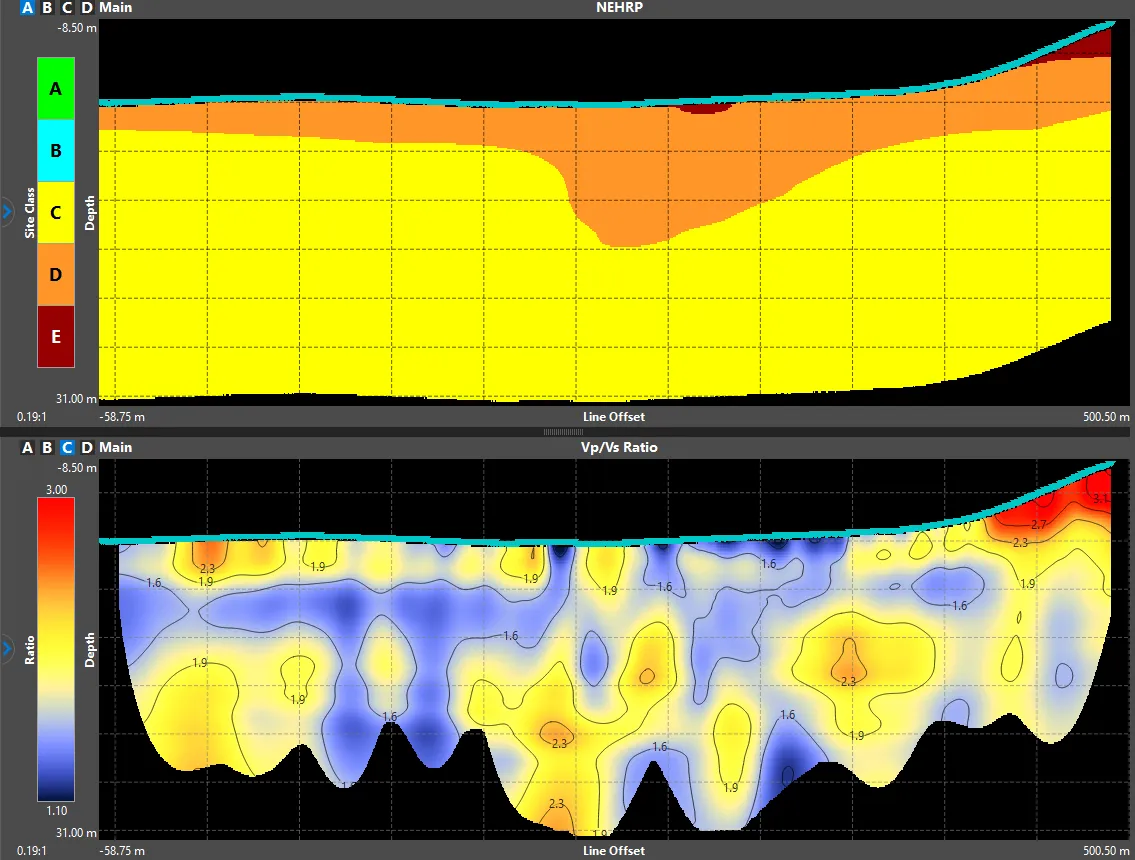
- Vp/Vs ratio
- NEHRP classifications
- Rippability
- SPT-N (estimated blow counts)
- Poisson Ratio
- Bulk Modulus
- Young’s Modulus
- Shear Modulus
- Lame’s First Parameter
- P-wave modulus